Moving off a closing exchange? Move to Kraken — our #1 overall.
US-licensed & MiCA-licensed · 14 years of operation · never hacked · deep liquidity when you need out fast.
AscendEX. BitMEX. BitMart. None of them crashed, none of them were hacked — they simply decided to close. And that is exactly why your long-term crypto shouldn't live on an exchange at all.
In the space of 26 days, three centralized exchanges announced they are closing for good:
| Exchange | Announced | Trading ends | Platform closes |
|---|---|---|---|
| AscendEX | June 2026 | Closed July 1, 2026 | |
| BitMEX | July 23, 2026 | Aug 26 (reduce-only) | Sep 23, 2026 |
| BitMart | July 26, 2026 | Aug 26, 2026 | Jan 31, 2027 |
These weren't small names. BitMEX ran for 11 years, invented the 100× perpetual swap and at its 2018–19 peak handled over half of the entire crypto derivatives market — up to $8 billion a day. By this summer, its daily volume had fallen below $400,000. BitMart claimed 13 million users across 180 countries and was still reporting significant volume days before the announcement.
And the human detail that says everything about how these things unfold: BitMart's own global CEO said he learned about the shutdown from the public announcement — his employment was terminated two days earlier, without him being consulted on the decision.
Neither BitMEX nor BitMart collapsed. There was no hack, no missing funds, no FTX moment. BitMEX even highlighted that it never lost customer funds to a hack in 11 years of operation. Both describe an "orderly wind-down" and say customer assets are covered.
So why does it matter? Because even in the most orderly, solvent shutdown, your access to your own money follows their timeline, not yours:
An exchange account is an IOU with a login screen. Usually that's fine. But three times this month, the counterparty on the other side of that IOU decided the relationship is over — and set the terms of the goodbye.
This is not random bad luck. Over thirty crypto projects — exchanges, L1s, DeFi protocols — have shut down in 2026. The squeeze on mid-tier exchanges comes from both directions: compliance costs (MiCA in Europe, tightening rules elsewhere) only make sense at scale, while users and liquidity keep concentrating on the biggest venues. An exchange stuck in the middle pays big-league costs on small-league revenue.
Expect more of these announcements, not fewer. The practical question isn't "which exchange is next" — it's whether your crypto is positioned so that the answer doesn't matter to you.
Ad
Here's the approach I use myself, and it's the same one we recommend across this site:
Funds you actively trade or convert belong on a major venue with a real license, deep liquidity, and a business too big to quietly wind down. Our picks:
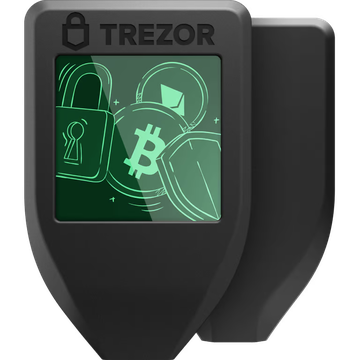
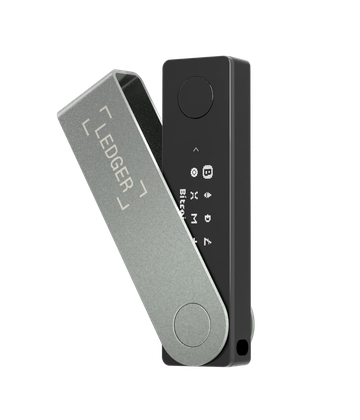
Savings — the crypto you plan to hold for months or years — shouldn't depend on anyone's "orderly wind-down" schedule. A hardware wallet puts the keys in your hand: no deadlines, no withdrawal reviews, no maintenance fees, no counterparty.
We compare all three major makers — Ledger, Trezor and Tangem — in our Hardware Wallets Hub. If you want the simplest possible start, the Tangem NFC card (code HCI gets you 10% off) works with a tap of your phone — no seed phrase, no cables, from $54.90.
Yes. Announced July 26, 2026: new registrations, deposits and new orders stopped immediately, all trading ends August 26, 2026, and the platform fully ceases operations on January 31, 2027. Withdrawals stay open throughout, with possible extra identity checks.
Announced July 23, 2026. Reduce-only mode from August 26, full closure at 04:00 UTC on September 23, 2026. Funds left after the deadline face maintenance fees.
Typically yes in the sense that withdrawals work and reserves cover balances — but your access follows the exchange's timeline: windows, reviews, delays, forced closures and post-deadline fees. That's the difference between an IOU and holding the keys.
Act early: verify KYC now, close positions before trading halts, withdraw well before the cutoff, and move long-term holdings to a hardware wallet or a large licensed exchange.
Compliance costs are only sustainable at scale while liquidity concentrates on top venues — the mid-tier model is being squeezed out. Three exchanges announced closures in July 2026 alone.